

Keynotes

Luping Wang
Director of the Alibaba Cloud Intelligent Design Center
Go Vibe Designing: Design Judgment in the AI Era
Luping Wang is Director of the Alibaba Cloud Intelligent Design Center and Vice Chairman of the Design Standards Branch of the China Industrial Design Association. He is also a Standing Committee Member of the Art and Design Professional Committee of the China Association for Educational Technology and a certified Senior Industrial Designer in Zhejiang Province. In 2024, he was recognised as one of China’s Top Ten Design Industry Promoters.
Abstract
Drawing on practice at the Alibaba Cloud Intelligent Design Center, Luping Wang will explore how designers’ core capabilities are evolving in the AI era. As interfaces, content and code can be generated rapidly, designers’ value increasingly lies in exercising judgment throughout the design process: defining intent, orchestrating systems and evaluating outcomes. The talk addresses a central question: when creating things becomes easier, which design capabilities become truly scarce?
Mixed Reality and Generative AI in Healthcare: From Rehearsal to Responsible Ca
Professor Pan Hui is Chair Professor of Computational Media and Arts and Director of the Center for Metaverse and Computational Creativity at the Hong Kong University of Science and Technology (Guangzhou). He also holds appointments as Chair Professor of Emerging Interdisciplinary Areas at the Hong Kong University of Science and Technology and Nokia Chair in Data Science at the University of Helsinki. Previously, Professor Hui served as Senior Research Scientist and subsequently Distinguished Scientist at Telekom Innovation Laboratories (T-Labs) in Germany. His industry research experience also includes positions at Intel Research Cambridge and Thomson Research Paris. His research has received support from major industry partners, including Nokia, Deutsche Telekom, Microsoft Research, and China Mobile. He has published more than 600 research papers, received over 40,000 citations, and holds 32 European and US patents. Professor Hui is an International Fellow of the Royal Academy of Engineering, a Member of Academia Europaea, an IEEE Fellow, and an ACM Distinguished Scientist. He is also a founding member of the INTERPOL Expert Group on Metaverse and was a member of the World Economic Forum’s Global Future Council on the Future of Metaverse. He earned his PhD in Computer Science from the University of Cambridge.
Abstract
Mixed reality and generative AI are opening new possibilities for clinical training and patient support. But expanding their role requires answering a harder question: What should we entrust to these systems, and what evidence should justify that trust? Drawing on our research, this keynote examines that question across three settings: clinical training, support beyond the clinic, and AI interactions without clinician oversight. In training, mixed-reality simulations move beyond fixed scenarios, allowing simulated patients’ conditions to evolve as trainees assess and act. AI-powered standardized patients extend rehearsal to clinical communication. For patient support, we explore wearables developed with rehabilitation clinicians and tools that help patients understand medical procedures. We also examine failures that matter when people turn to AI without a clinician present. In a workshop involving seventy clinicians, educators, and researchers, subtle changes in wording shifted models’ sensitivity to risk, while models sometimes agreed when they should have challenged a premise. Together, these projects highlight both opportunities to extend human expertise and the need to test the limits of that extension. The keynote considers what evidence is needed to move from promising demonstrations to justified roles in care. The goal is healthcare in which rehearsal comes before the stakes are real, patients understand what is about to happen to them, and systems are entrusted only with responsibilities they have demonstrated they can fulfil.

Pan Hui
Professor, Hong Kong University of Science and Technology, Chair Professor of Emerging Interdisciplinary Areas at the Hong Kong University of Science and Technology and Nokia Chair in Data Science at the University of Helsinki
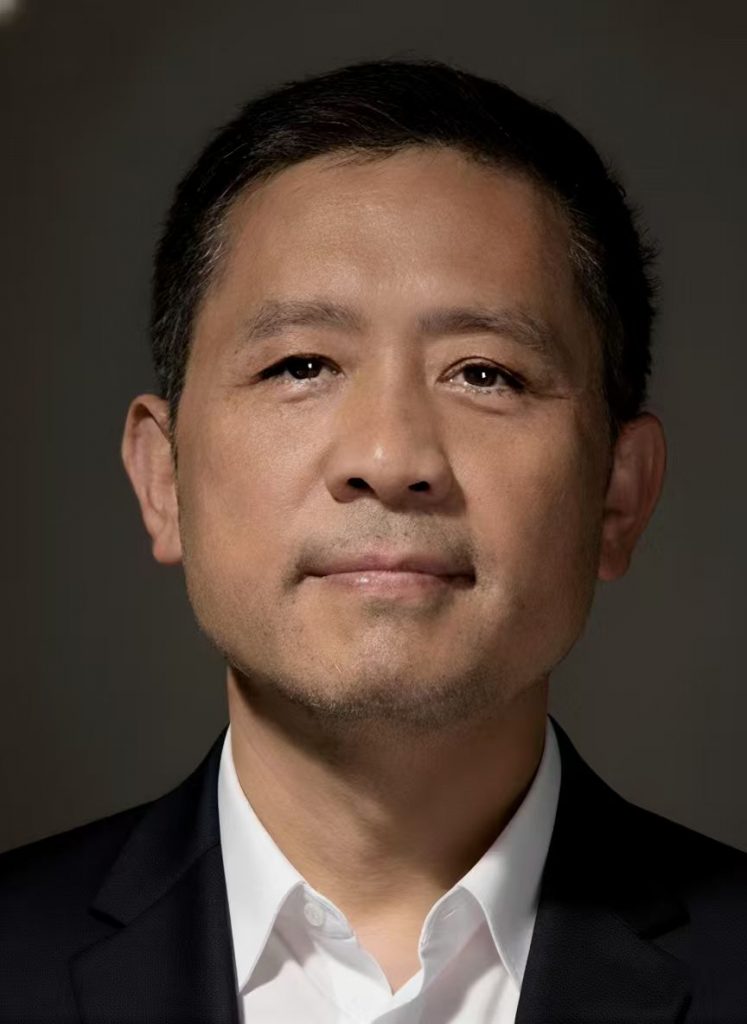
Prof. Fangtian Ying
Professor at Zhejiang University, Fellow of the European Academy of Engineering, and Director General of the World Eco-Design Organization (WEDO)
Symbiotic Health — Toward a Relational Paradigm for Health Design
Prof. Fangtian Ying, Professor at Zhejiang University, Fellow of the European Academy of Engineering, and Director General of the World Eco-Design Organization (WEDO), specializes in eco-design engineering and integrated product innovation. He has developed a five-dimensional eco-design model that integrates design, technology, business, users, and culture, providing a systematic framework for advancing sustainable and innovation-driven product development. His design innovations have received numerous prestigious international awards, including 18 German Red Dot Design Awards, 21 German iF Design Awards, and 2 U.S. IDEA Awards. With extensive contributions to eco-design and innovation design, Prof. Ying has established a strong international reputation and exerted broad influence in the field.
Abstract
This topic re-examines the paradigm shift in health design from human-centred design to relational design. Health is not merely an individual condition, but emerges through dynamic relationships among humans, technology, society, space, and ecology. Drawing on the BodySymphony and Health Spatial Computing cases, the topic introduces the S.H.A.R.E. relational health framework and explores how to design healthier relationships that support autonomy, dignity, reciprocity, adaptability, and ecological regeneration.
